


- Home
- Attorneys
- Practice Areas
- Immigration
- Citizenship and Naturalization
- Deportation/Removal Defense
- Asylum
- Family Based Immigration
- Fiancé Visa
- Employment-Based Immigration
- Adjustment of Status & Consular Processing
- Immigration Interview - The Dos & Don'ts
- Non-Immigrant Visas
- H-1B Visas
- L Visas
- E Visa
- VAWA
- U Visas
- Removal of Conditions from Green Card
- Criminal Convictions
- Waivers
- Working in the U.S.
- FAQs
- Real Estate
- Immigration
- Info Center
- Blog
- Contact
- Make Payment
What Evidence Do Employers Need for Sponsorship?
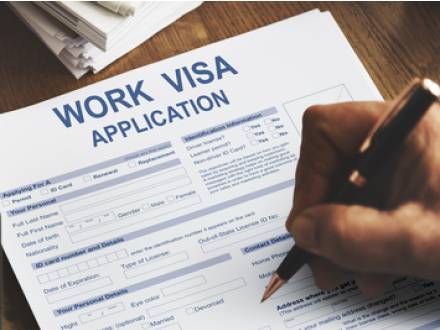 Sponsoring a foreign worker for a visa or green card takes careful planning and the right paperwork. Employers who do not have the correct documents in place can face delays, denials, or serious legal trouble.
The worldwide employment-based visa limit for the fiscal year 2025 was at least 140,000. That is a lot of competition, and USCIS looks closely at every petition it receives. Getting your evidence right the first time makes a real difference. If you are an employer looking to sponsor a worker or an employee preparing for a work visa, the Itasca, IL immigration lawyer at Unzueta Law Group, P.C. can walk you through every step.
What Does It Mean To Sponsor an Employee Visa?
When an employer sponsors a foreign worker, they are telling the U.S. government that they have a real job to fill and they want to hire a specific person for it. The employer takes on legal and financial responsibility as part of that commitment.
Sponsorship can apply to temporary work visas, like the H-1B for specialty occupations, or to a green card through employment-based preference categories. Each type has its own rules and its own required documents.
What Basic Evidence Does Every Employer Need When Sponsoring a Work Visa?
No matter what type of sponsorship is involved, there are some core documents almost every employer will need. These include:
-
Proof that the business is real and operating, such as registration documents, tax records, and financial statements
-
A clear description of the job being offered, including duties, requirements, and how the role fits in the company
-
Evidence that the employer can afford to pay the offered wage
-
The employer's Federal Employer Identification Number and other basic business information
These documents are the foundation of any sponsorship petition. Without them, USCIS has no way to confirm that the employer or the job is legitimate.
What Evidence Is Needed for an H-1B Visa?
The H-1B is one of the most common employer-sponsored work visas. It is for jobs in specialty occupations that typically require at least a bachelor's degree in a specific field and is addressed by the Immigration and Nationality Act, 8 U.S.C. § 1101(a)(15)(H)(i)(b).
Before filing with USCIS, the employer must get a Labor Condition Application certified by the Department of Labor. This document confirms that the employer will pay the prevailing wage for the role in that area and that hiring the foreign worker will not hurt U.S. workers in similar positions.
After the LCA is approved, the employer files Form I-129 with USCIS. The key documents that go with it include the certified LCA, a job description that clearly shows the position is a specialty occupation, the worker's educational credentials, like degrees and transcripts, and any required licenses or certifications. If the worker's foreign degree needs to be evaluated, a credential evaluation from a recognized service is also required.
What Evidence Is Needed for a PERM Labor Certification?
If an employer wants to sponsor a worker for a green card through the most common employment-based path, the first step is usually PERM, which stands for Program Electronic Review Management and is run by the Department of Labor.
PERM requires the employer to show that no qualified U.S. workers were available for the job before sponsoring someone from another country. To do that, the employer must conduct a real job search and keep detailed records of it. That typically includes running job ads in newspapers, posting the job on the company website, listing it with the State Workforce Agency, and taking other recruitment steps based on the type of role.
The employer must document every application received, how each person was considered, and the specific job-related reason why each U.S. applicant was not selected. If even one qualified U.S. applicant was turned away for a reason that does not hold up, PERM can be denied.
What Are Common Mistakes Employers Make With Work Visas?
Even employers who try to do everything right can make mistakes that slow down or derail a sponsorship petition. Some of the most common include:
-
Writing job descriptions that are too vague or do not clearly show the position qualifies for the visa category
-
Not keeping thorough records during the PERM recruitment process
-
Submitting financial documents that do not clearly show the ability to pay the required wage
-
Missing filing deadlines or not responding to a Request for Evidence (RFE) on time
Working with an immigration attorney from the beginning helps employers catch and fix these issues before they become problems.
Contact Our DuPage County, IL Employment-Based Immigration Attorney
Employer sponsorship is one of the most document-heavy processes in immigration law, and the stakes are high for both the employer and the employee. At Unzueta Law Group, P.C., we are a local family firm that has spent over 20 years helping employers and workers navigate the immigration process. We work closely with our clients to make sure every petition is thorough, accurate, and ready for USCIS review. Call 630-509-2363 today to speak with an Itasca, IL immigration lawyer and take the first step toward bringing the right person onto your team.
Se habla español.

Contact Unzueta Law Group, P.C.
 The use of the Internet or this form for communication with the firm or any individual member of the firm does not establish an attorney-client relationship. Confidential or time-sensitive information should not be sent through this form.
I have read and understand the Disclaimer and Privacy Policy.

